A field guide for Northglenn homeowners
Water mitigation in Northglenn: stop the spread, then prove it’s dry
What happens in the days after a leak in a 1960s or 1970s Northglenn house: getting the water out, cutting only what can’t dry, and reading moisture meters until framing and subfloor match a dry part of the home.
No company stands behind this guide. Confirm any crew’s coverage by street address before you rely on it. This is a draft site with no phone line and no working request form.
How readings should fall. An illustration, not data from a real job.
Before anyone arrives
The first hour
- Stop the waterShut off the water at the fixture or the main. Cut power to wet rooms only if you can reach the panel on dry ground.
- Get things off the floorPull up rugs and set furniture legs on foil squares or wood blocks.
- Photograph everythingPhotograph every wet room before anything gets moved or thrown out.
- Make two callsCall your insurer, then a mitigation company you’ve checked by street address.
Danger comes first. Water near outlets, a sagging ceiling or the smell of gas means everyone gets out and someone calls 911.
Days 1 to 5
Mitigation is everything that happens before repairs
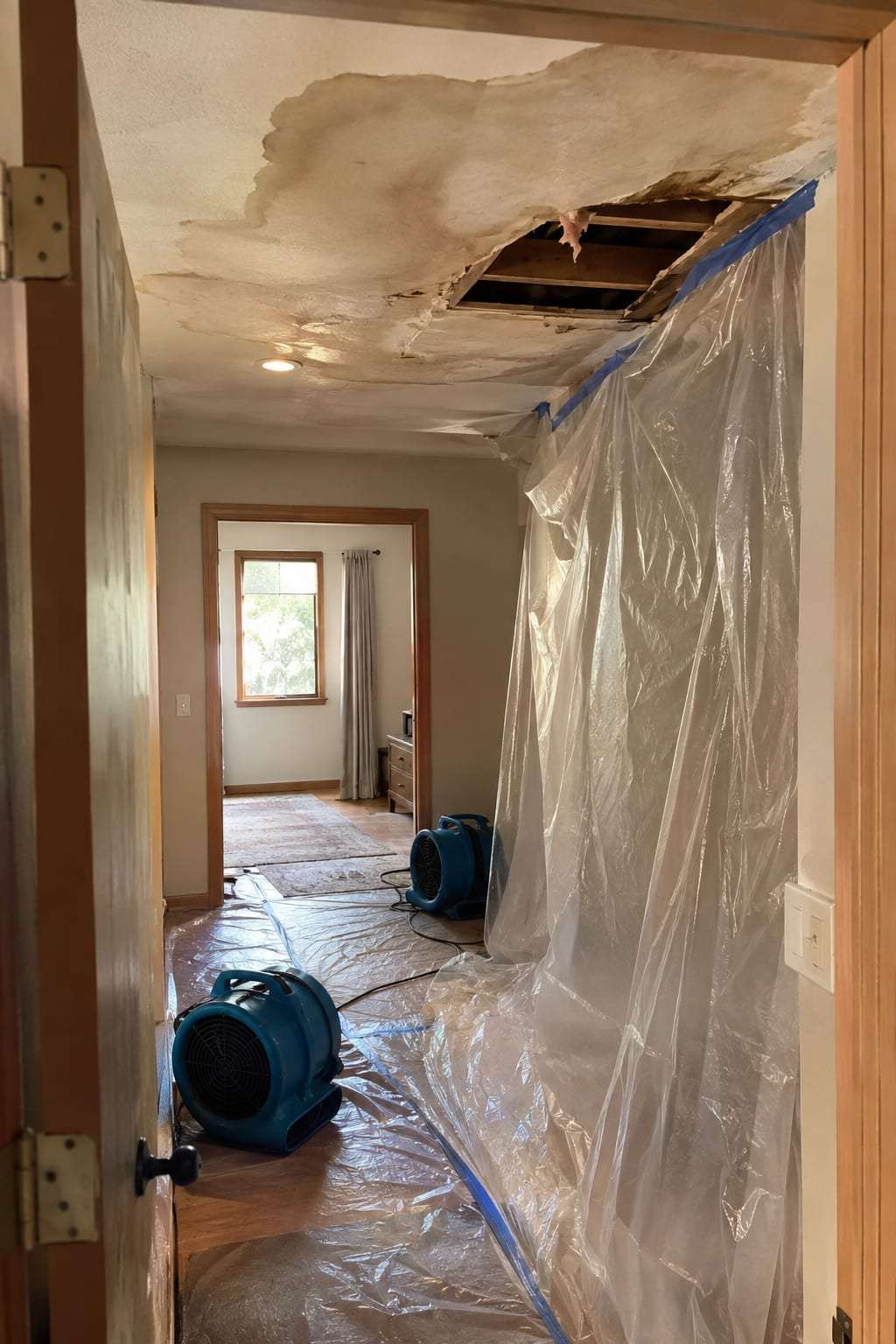
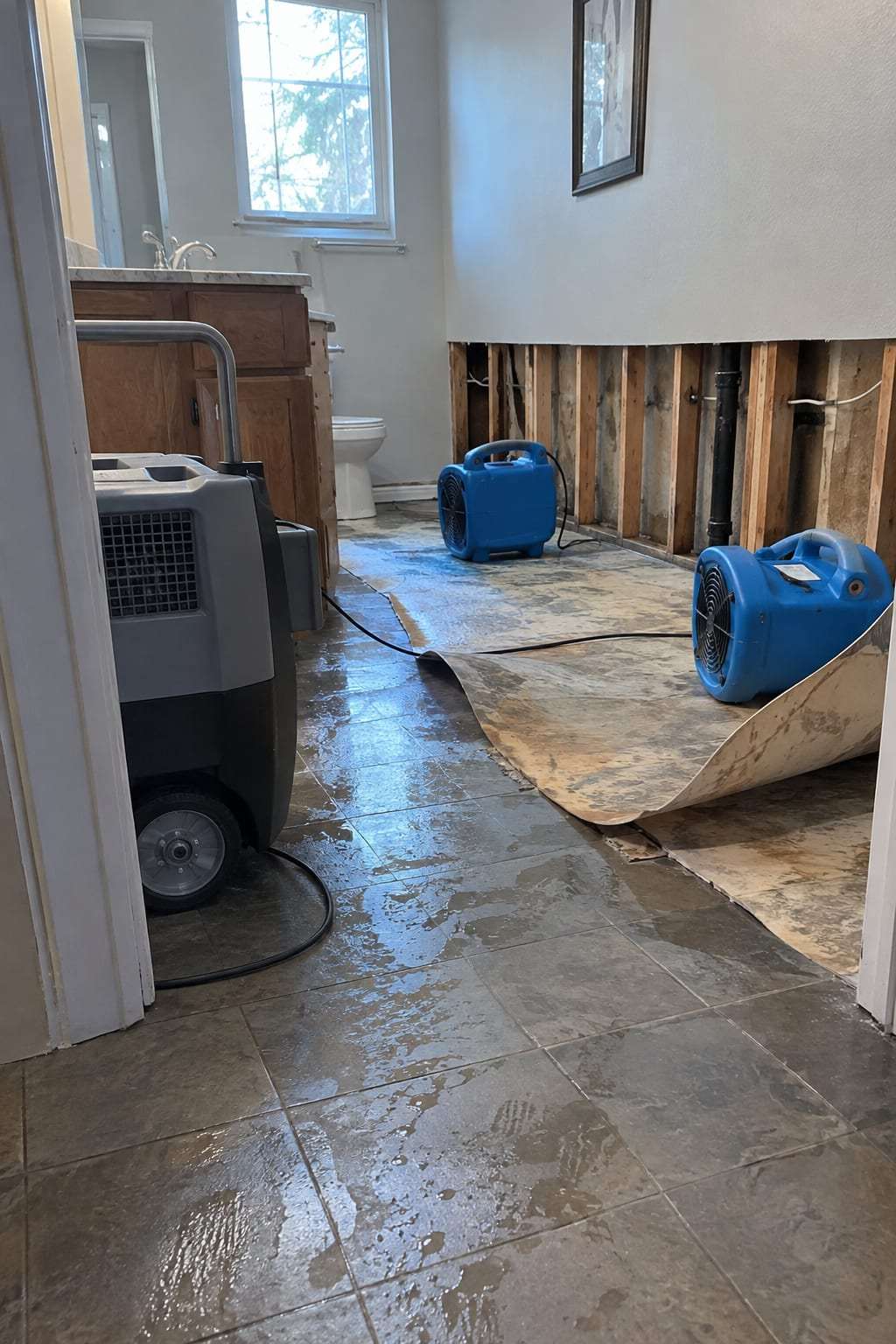
Mitigation keeps a leak from turning into a rebuild. A crew pulls out standing and absorbed water, removes what can’t be saved, such as soaked carpet pad or swollen particleboard, and dries the structure back to normal moisture before mold has time to start. Most insurers expect you to begin it promptly.
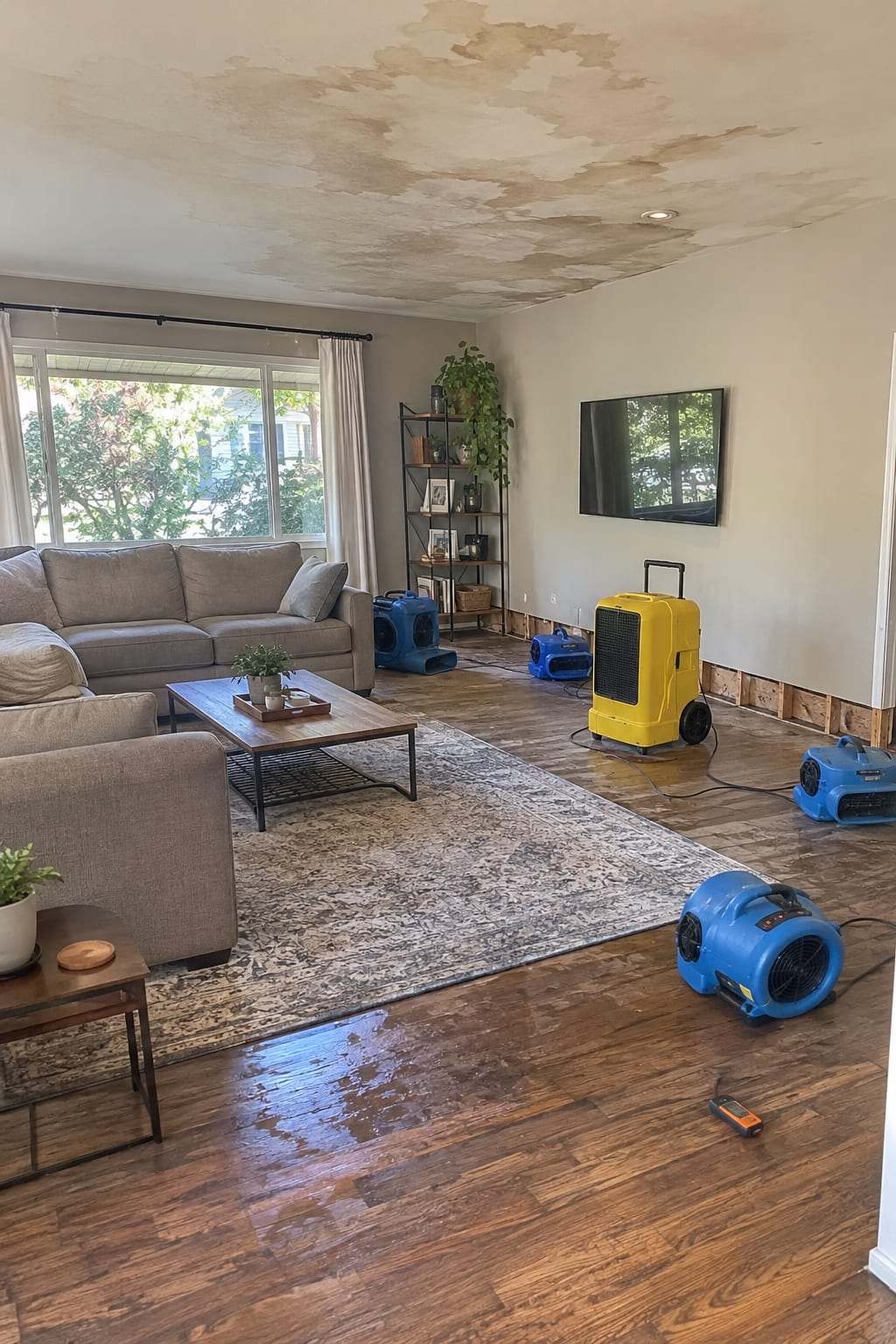
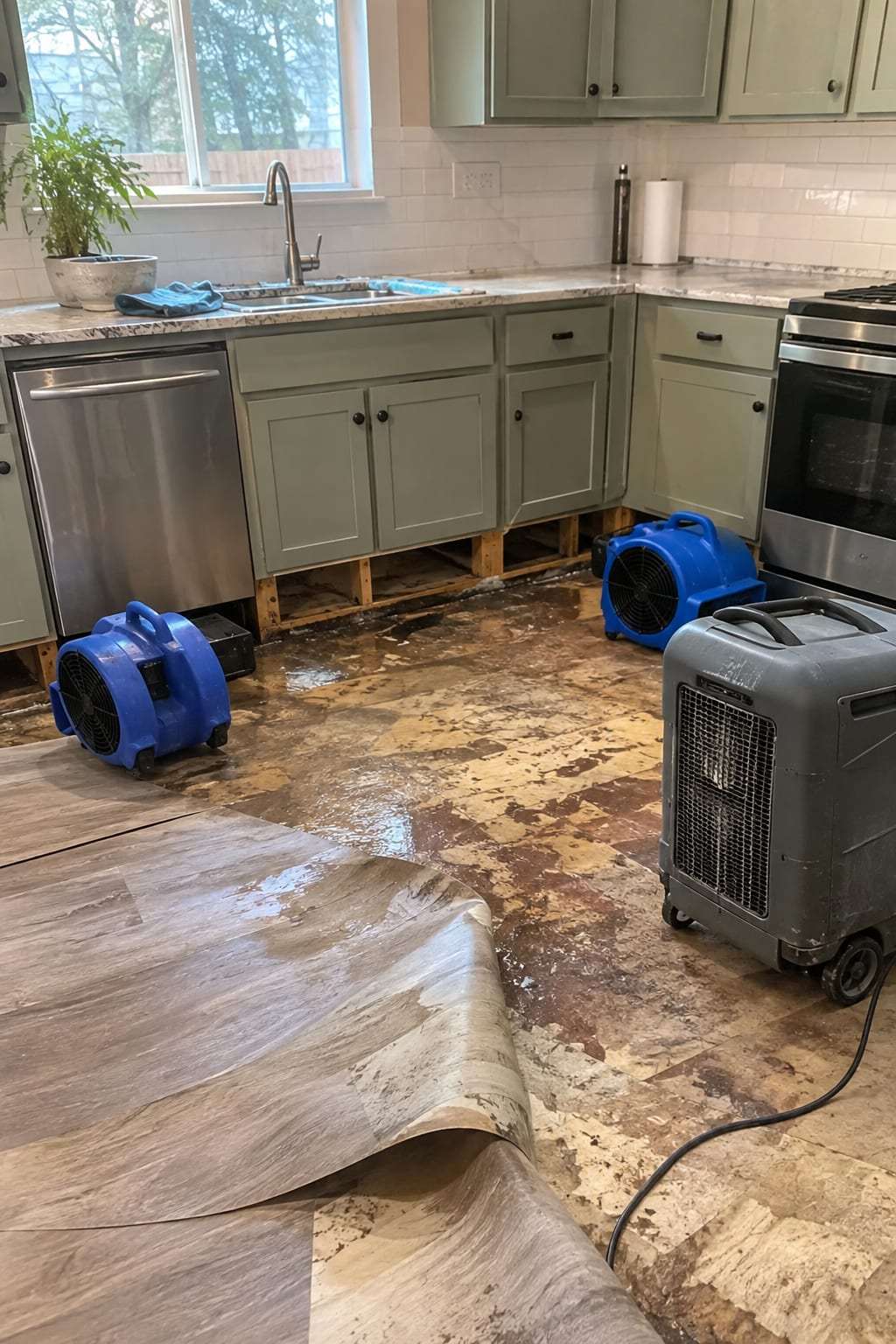
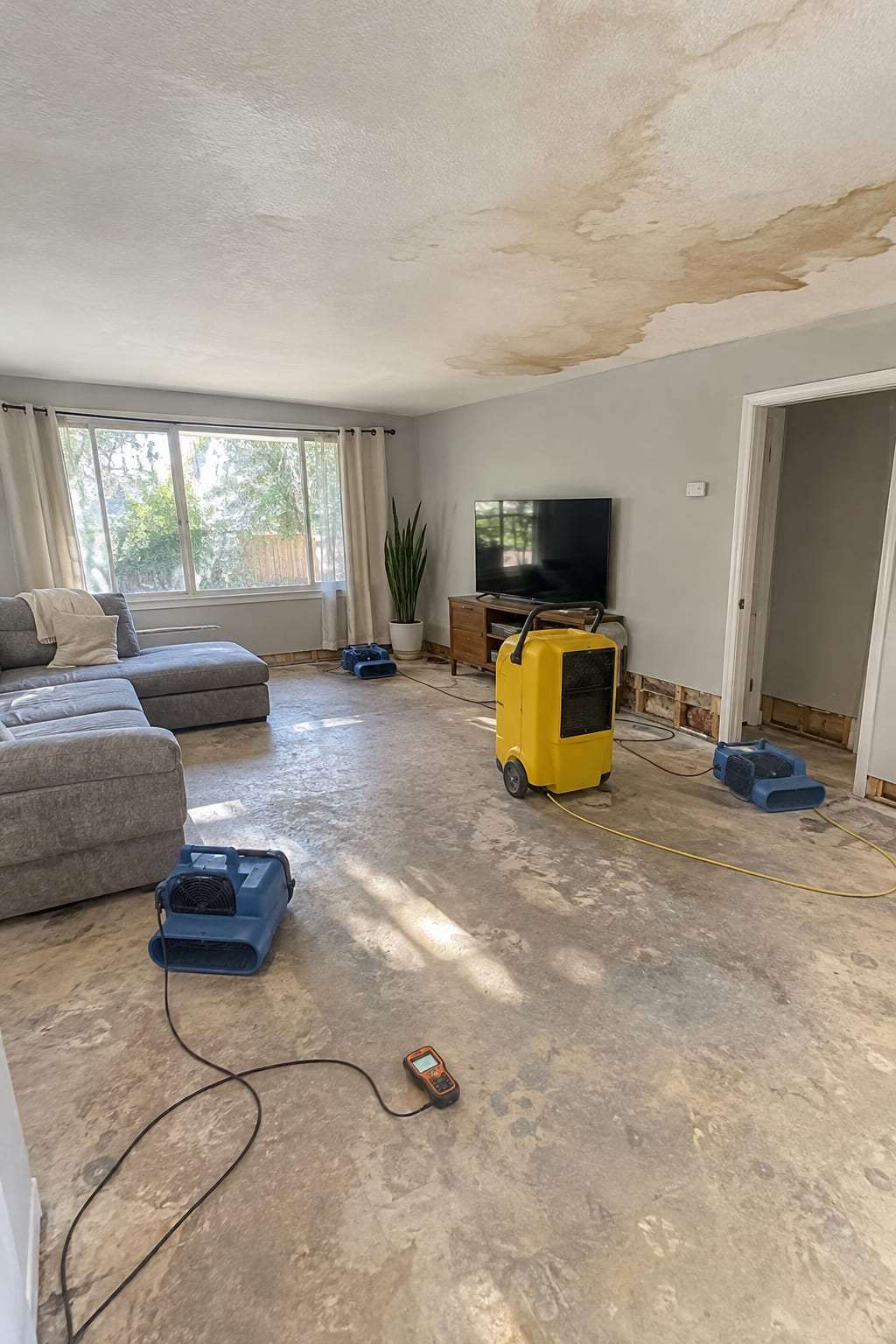
Structural drying does most of the work. Air movers sweep air across wet surfaces, dehumidifiers pull that moisture out of the room, and a technician reads the same marked spots each day until framing, subfloor and drywall read like the dry parts of your house.
Dry is a reading on a meter, not a feeling under your hand.
Five steps, each one written down
Ask for every step in writing, so you can check the drying instead of taking it on trust.
- Step 1
Assess
Find the source and map the wet area with meters, behind baseboards included.
- Step 2
Extract
Pull standing water off the floor and absorbed water out of carpet and pad.
- Step 3
Remove
Cut out what can’t dry in place, like saturated pad, once a reading shows it’s wet.
- Step 4
Dry
Set air movers and dehumidifiers, then read the same marked spots every day.
- Step 5
Verify
Start repairs only after wet readings match a dry reference in your house.
What a written drying plan spells out
- Moisture mapping
- Where the water went, room by room, including behind baseboards and under the flooring.
- Hardwood floors
- Whether wood flooring can dry in place, how fast, and when cupped boards need to come up.
- What comes out
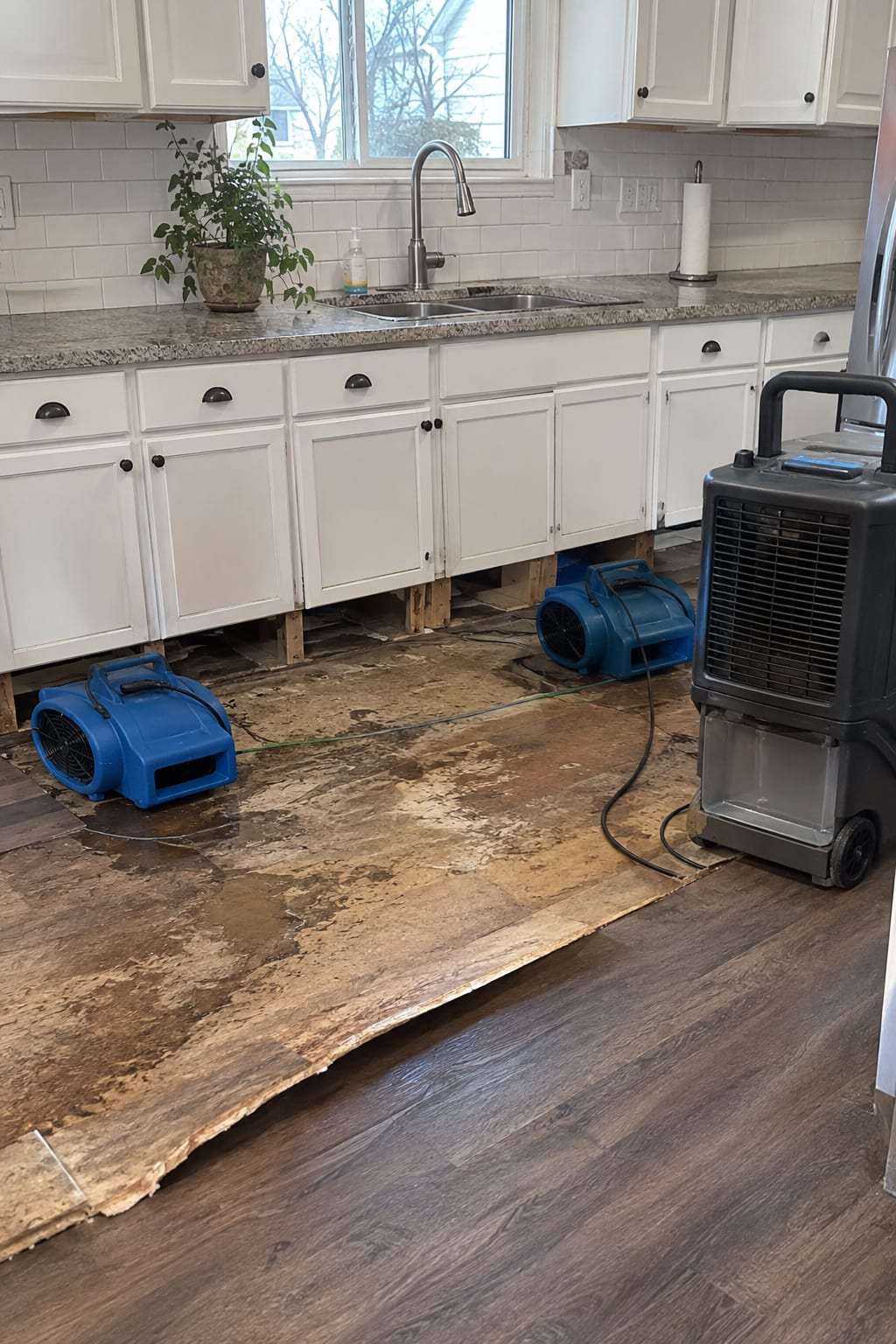
- Only what can’t dry in place: soaked pad, crumbling drywall, swollen particleboard.
- Equipment
- Air movers and dehumidifiers sized to the wet area, with cavities opened where water is trapped.
- Moisture assessment
- The same marked spots every visit, compared with a dry reference elsewhere in the house.
- The finish line
- Equipment moves when a reading stalls and leaves when readings reach the reference.
Dry is a number on a meter. Ask to see it before anyone closes a wall.
Before repairs
Why the readings matter
Framing and subfloor can feel dry on the surface while the inside still holds water. Close a wall or lay new flooring over damp material and you get mold or buckled boards a few weeks later. A moisture meter measures what your hand can’t, and the daily log shows the day drying is done.
Signs the water went deeper than the floor
- Carpet or pad squishes underfoot after you’ve mopped the surface.
- Drywall, baseboards or cabinet bases have darkened, softened or swollen.
- Water reached a lower level, a ceiling below, or the inside of a wall.
- It sat for more than a few hours before anyone found it.
Before you hire
Who does the work
Some mitigation companies send their own employees. Others subcontract the drying, the repairs or both. Ask which before you sign anything.
No business has been confirmed to take requests or do work through this site, so this guide names none.
What the first call should cover
Expect questions about the source, how long the water sat and which rooms got wet. Ask yours too: is my street address in your area, who will arrive, and when.
Adams County, north of Denver
Why Northglenn houses dry the way they do
Northglenn started in 1959 as a planned community in Adams County, north of Denver. Much of it went up in the 1960s and 1970s: ranches, bi-levels and split-levels with basements, many still on original supply lines or water heaters near the end of their life.
Caught early, those houses usually dry in place. Leave the water a few days and the job grows to include cut drywall, pulled flooring and a longer claim.
- Ask any company to confirm your street address is in its service area, not just the city name.
- Thornton and Westminster share much of the same housing stock and the same weak spots.
- Aging water heaters and sink supply lines are common leak sources in homes this age.
- Many crews that serve Northglenn drive in from elsewhere in the metro. Ask where they’re coming from.
ZIP codes covering Northglenn: 80234 (Denver), 80233 (Denver).
Also nearby: 80241, 80260, 80031, 80229, 80023, 80020, 80602, 80640, 80030, 80221, 80021, 80003, 80603.
Go further: readings, records and north metro basements
Guides, worksheets and illustrative examples for following a drying job from the first wet carpet to the last dry reading.
- Services
These guides cover the stretch between the moment the water stops and the moment someone proves the house is dry.
- Resources
Print these before you need them, or pull them up mid-leak.
- Nearby Cities
Northglenn’s neighbors built at different times, and it shows in a drying job.
Frequently Asked Questions
Short answers. The FAQs page covers what to ask before anyone starts.
What's the difference between mitigation and restoration?
Mitigation stops the damage from growing: extraction, removal of what can’t be saved, and drying. Restoration repairs and rebuilds what was lost. Insurers often treat them as separate parts of one claim.
How do you know when materials are dry?
A technician compares readings in the wet area with readings from the same material in a part of the house that never got wet. Drying continues until the two match.
What affects the drying timeline?
How much water there was, how long it sat, what it soaked into, the temperature and humidity in the house, and how soon drying started.
Will the equipment be loud?
Yes. Air movers and dehumidifiers hum around the clock, usually for several days. Plan for a noisy room and a higher electric bill.
Do drying records help with an insurance claim?
They help an adjuster see what happened. Photos, daily moisture logs and an equipment list are the core of it. Your insurer still decides what’s covered.
Will a mitigation company come to Northglenn?
Northglenn sits in the north metro beside Thornton and Westminster, close enough that crews based in either may cover it. Ask any company to confirm your street address and its travel time before you commit.
Does it matter if the company isn’t based in Northglenn?
Not by itself. Many crews that work in Northglenn are based elsewhere in the metro. Ask where the crew is coming from and how soon someone can realistically be at your door.
Describe the water damage
This form is not connected. This website is a draft preview: no business has been confirmed to receive requests, so the fields below are switched off and nothing can be sent. In an emergency, call 911.